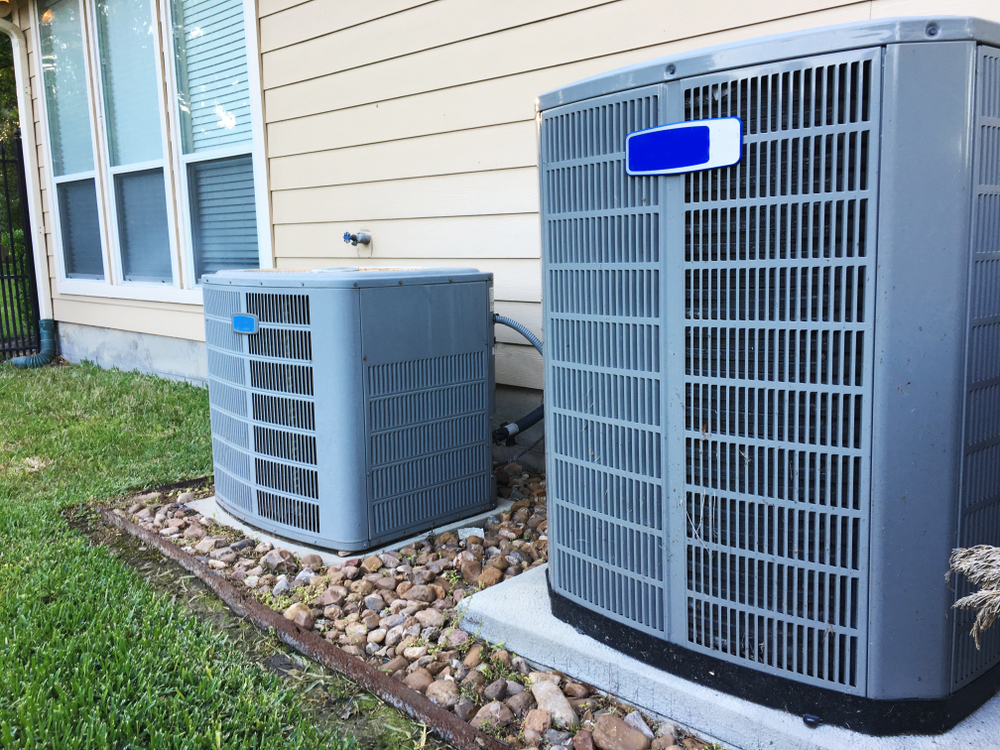
If you've been thinking about replacing your home's air conditioning unit with an upgrade, you might be surprised to learn that this current fall period we're in is actually often considered ideal for this sort of job. We haven't quite reached the cold and moisture levels of the Utah winter yet, but temperatures have dropped enough that many homes can afford to go a few days without AC during a replacement -- and one of the key factors if you're replacing your AC is where the new unit will be placed.
At Airtime Heating & Cooling, we're happy to offer quality air conditioner and heater installation services for clients around the state, and helping you determine the ideal installation location is just one of several areas we'll assist you with here. This two-part blog series will look at some of the variables we'll be evaluating during this process.
As you may have guessed, one of the key installation location factors we'll be considering is the placement of your prior unit. Most AC installation jobs we carry out are done on properties where a previous unit was already in place – and in these cases, there are both good and bad reasons to try and keep the new unit in the same spot.
On the plus side, leaving the new unit where the old one was located will often minimize ductwork costs and make installation much quicker overall. In some cases, you might also be able to avoid having to pour a new concrete pad for the unit.
On the downside, there are certain circumstances where it might not be ideal to keep the unit in the same spot as before. For example, if your old unit was located in a very sunny or windy area, this might have caused it to degrade more quickly and require more frequent repairs – so you might want to consider a new location that's more protected from the elements.
As noted, one potential issue with changing your AC unit's placement is the potential ductwork costs associated with this change. In many cases, it might be necessary to slightly reconfigure or even replace parts of your home's ductwork in order to make the new unit placement work.
In other cases, you might be able to avoid ductwork changes altogether by simply having your ducts cleaned and conditioned as part of the installation process. This can often help improve airflow and ensure that your new unit is working as efficiently as possible – meaning it will pay for itself over time through lower costs.
Another consideration is whether the unit will be exposed to direct sunlight for any significant period of time during the day. In some cases, this might not be an issue – but if your unit is in a particularly sunny spot, it might cause it to overheat more frequently and require more frequent repairs.
As such, you might want to consider a location that's shaded for at least part of the day, or that's otherwise not exposed to direct sunlight. This can often help improve the unit's lifespan and ensure that it's working as efficiently as possible.
In part two of our series, we'll go over some further concepts to consider here. For more on this, or to learn about any of our HVAC installation or repair services, speak to our team at Airtime Heating & Cooling today.